
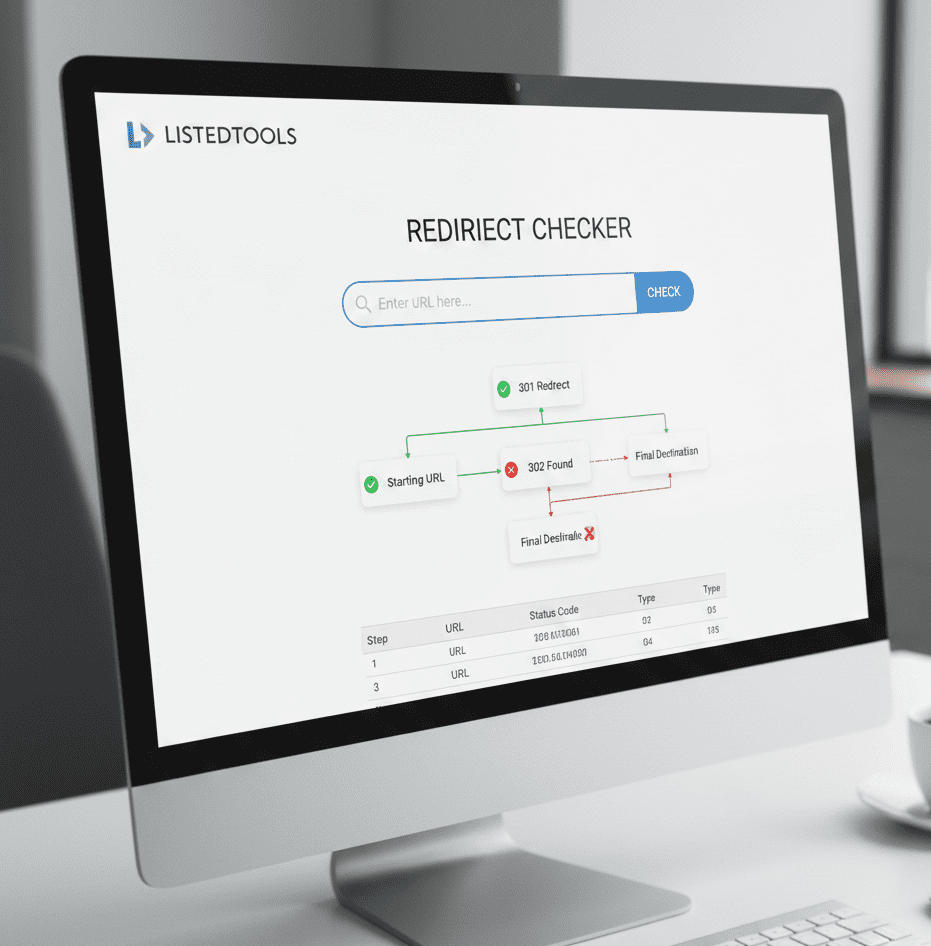
Redirect Checker
This tool helps you analyze URL redirects and verify that your website redirects are working correctly. Check HTTP status codes, redirect chains, and final destination URLs to ensure optimal user experience and SEO performance.
How to use: Enter one URL per line and click “Check Redirects” to trace the full redirect path. The tool will show you each step in the redirect chain along with relevant HTTP status codes.
Note: This is a demonstration tool that simulates redirect analysis. For comprehensive redirect checking, consider using dedicated SEO tools like Screaming Frog or server-side scripts.
Analyzing redirects… This may take a moment.
Redirect Analysis Results
Redirect Checker | Test URL Redirects & Status Codes
Check URL redirect chains, status codes, and response times instantly. Our free redirect checker helps identify SEO issues and broken links.
Introduction
Are your website redirects working correctly? Could broken redirects be hurting your SEO performance? Redirect chains, loops, and incorrect status codes can damage user experience and search rankings. A redirect checker provides complete visibility into your URL redirection patterns. This guide will show you why proper redirects matter and how our free tool helps you maintain optimal website structure and SEO health.
What is a Redirect Checker?
A redirect checker is a diagnostic tool that follows URL redirections and reports the complete chain from start to final destination. It analyzes each step in the redirection process and provides detailed technical information.
Our comprehensive checker analyzes:
- Redirect chains and loops
- HTTP status codes (301, 302, 404, etc.)
- Response times for each hop
- Final destination URLs
- Canonical URL information
Why Redirect Analysis is Crucial
Proper redirect management directly impacts SEO performance, user experience, and website maintenance.
1. SEO Preservation
Maintain search engine rankings when moving or updating content by using proper 301 redirects.
2. User Experience
Ensure visitors reach their intended destination without frustrating delays or error pages.
3. Link Equity Transfer
Preserve the SEO value of backlinks when URLs change by implementing correct redirect chains.
4. Website Maintenance
Identify and fix broken redirects that can cause 404 errors and lost traffic.
Key Features of Our Redirect Checker
Our tool provides enterprise-level redirect analysis with these powerful features.
- Complete Chain Analysis: Follow up to 10 redirect hops
- Status Code Verification: Confirm correct HTTP response codes
- Performance Timing: Measure redirect speed and bottlenecks
- Bulk URL Checking: Test multiple redirects simultaneously
- Detailed Reports: Export results for documentation and analysis
Common Redirect Issues Identified
Here are typical problems our checker helps you discover and resolve.
Redirect Chains
- Multiple hops slowing down page loading
- Unnecessary intermediate redirects
- Opportunities to streamline to direct redirects
Incorrect Status Codes
- Using 302 (temporary) instead of 301 (permanent) redirects
- Mixed signals confusing search engines
- Lost SEO value from improper redirect types
Redirect Loops
- Infinite cycles that break user experience
- Server resource waste from endless requests
- Critical errors requiring immediate fixes
How to Check Redirects in 3 Steps
Analyzing your URL redirects is simple with our streamlined process.
- Enter URL: Input the starting URL you want to check
- Start Analysis: Initiate the redirect tracing process
- Review Report: Examine the complete redirect chain and recommendations
Redirect Best Practices
Follow these guidelines for optimal redirect implementation and management.
Use 301 Redirects for Permanent Moves
Signal to search engines that content has permanently moved to preserve SEO value.
Keep Chains Short
Aim for direct redirects rather than multiple hops to improve loading speed.
Update Internal Links
Point internal navigation directly to new URLs rather than relying on redirects.
Monitor Regularly
Schedule periodic redirect audits to catch and fix issues proactively.
Understanding Redirect Status Codes
Different HTTP status codes serve specific purposes in URL redirection.
301 Moved Permanently
Permanent redirect that passes full SEO value to the new location. Ideal for content migration.
302 Found (Temporary)
Temporary redirect that doesn't pass full link equity. Use for short-term moves.
307 Temporary Redirect
Similar to 302 but with guaranteed method preservation (POST remains POST).
308 Permanent Redirect
Similar to 301 but with guaranteed method preservation.
Conclusion
Proper redirect management is essential for maintaining SEO value, ensuring positive user experiences, and preserving link equity during website changes. A reliable redirect checker provides the visibility needed to identify and fix redirect issues before they impact your search rankings and visitor satisfaction. Whether you're migrating websites, cleaning up old content, or optimizing site structure, regular redirect analysis ensures your URLs work efficiently and effectively.
Ready to optimize your redirects? [Use our free Redirect Checker now] and ensure your URL structure supports your SEO goals!
- Good for tracing shortened URLs and complex, multi-step redirect chains.
Frequently Asked Questions (FAQs)
Is this redirect checker completely free?
Yes, 100% free with no usage limits, registration requirements, or hidden costs.
How many redirect hops can you follow?
Our tool follows up to 10 redirect hops to identify even complex chains and loops.
Can I check multiple URLs at once?
Yes, our bulk checking feature allows you to test multiple redirects simultaneously.
What's the difference between 301 and 302 redirects?
301 is permanent and passes SEO value, while 302 is temporary and doesn't pass full link equity.
Is this redirect checker completely free?
Yes, 100% free with no usage limits, registration requirements, or hidden costs.
How many redirect hops can you follow?
Our tool follows up to 10 redirect hops to identify even complex chains and loops.
Can I check multiple URLs at once?
Yes, our bulk checking feature allows you to test multiple redirects simultaneously.
What's the difference between 301 and 302 redirects?
301 is permanent and passes SEO value, while 302 is temporary and doesn't pass full link equity.